Outgrowing Etsy and TikTok Shop: when to start your own website (and how to run both)
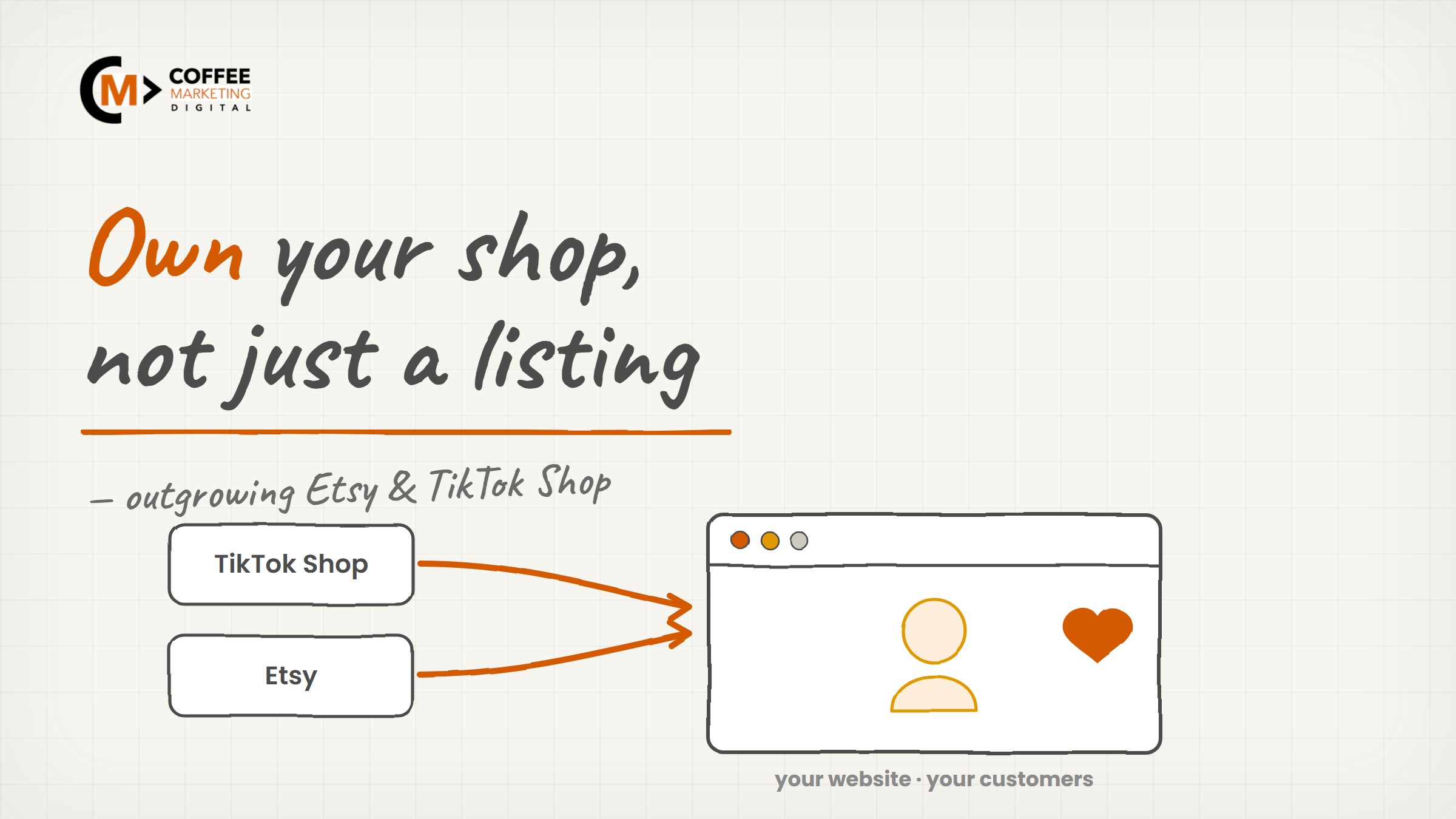
If you started selling on Etsy or TikTok Shop, you already know how good they are for getting going. What you might not have clocked yet is the quiet catch: you do not own your customers, the platform does. This article looks honestly at when it is worth launching your own website, and how to run it alongside the marketplaces rather than instead of them.
Marketplaces are the right place to start
Let us be fair to them first. Etsy, TikTok Shop and Amazon are brilliant places to begin. The barrier to entry is low, the audience is already there, and you can test whether people actually want your product without building anything from scratch. For a new seller, that is exactly what you need, and we would tell anyone to start there.
The point of this article is not "leave the marketplaces". It is that the thing which makes them a great start is also what caps you later.
The catch: you are renting, not owning
Three costs come with selling on someone else's platform, and they grow as you do.
You rent the audience. When someone buys from your TikTok Shop or your Etsy store, they are the platform's customer, not yours. You usually cannot email them, cannot easily bring them back, and cannot build a proper relationship on your own terms. You made the sale, but you do not get to keep the customer.
You give away margin. Every sale carries a cut. On a UK TikTok Shop that is a flat 9% all-in commission, taken off the top before you have counted a single one of your own costs. On Etsy the listing, transaction and payment fees stack up in the same direction. When you are testing, that is a fair price for the reach. When you are scaling, it is margin walking out of the door.
You live by the platform's rules. The algorithm changes, a policy shifts, an account gets suspended, and your entire shopfront can wobble or vanish overnight, with no say from you. Building a business entirely on rented land is fine until the landlord changes the terms.
A word from someone who actually runs one
I run a TikTok Shop myself, so I am not talking in theory here. It is brilliant for getting in front of people quickly, and I would genuinely tell anyone to start there. But here is the honest bit: every sale is TikTok's customer, not mine. I cannot just email them, and 9% comes off the top before I have even counted my own costs. The moment you realise you are paying to rent an audience you could actually own, that is when it is worth building your own place too. Not instead of the shop, alongside it.
Carrie Sargent, Digital Business Manager at Coffee Marketing (and TikTok Shop seller)
When it is time to start your own website
You do not need your own site on day one. You need it when the signs below start showing up, because that is when the marketplace fees and the rented audience start costing you more than they are worth.
- Repeat customers are asking to buy direct. People want to come back to you, not hunt for your listing again.
- Your sales are consistent. You have proven the demand, so you are no longer testing, you are building.
- The fees have started to hurt. At volume, that commission is a real number, and your own site keeps far more of it.
- You want a brand, not a listing. Somewhere that looks and sounds like you, not a template shared with every other seller.
- You want to own your customer list. An email list you control is the single most valuable asset a small shop can build, and the marketplaces will not hand it to you.
If two or three of those ring true, it is time.
You do not have to choose: run both
This is the part people get wrong. Launching your own site does not mean quitting the marketplaces. The smart setup runs both, with each doing what it is best at.
Think of your website as the hub and the marketplaces as channels that feed it. TikTok Shop and Etsy are superb at discovery, putting you in front of people who have never heard of you. Your own site is where you turn those one-off buyers into repeat customers, keep more of the margin, and actually own the relationship. Where the platforms allow it, a note in the parcel or a follow-up nudges happy buyers towards your site for next time, onto your email list and into a proper relationship.
Keep your pricing and your brand consistent across all of them so you are not competing with yourself, and let each channel play its part. Discovery on the marketplaces, loyalty and margin on your own site.
What a first website actually needs to do
Good news: it does not need to be big or expensive. A first own-site for a marketplace seller needs to look like your brand, show your products properly, load fast on a phone, be found on Google and by AI, and, above all, capture customers onto a list you own. A handful of pages, done properly, on your own domain. That is the foundation, and you build from there.
Where we come in
We design, build and look after websites for small businesses, on your own domain, kept fast and found, with all the technical upkeep off your plate. For marketplace sellers, the real win is owning what the platforms keep from you: the customer relationship, the email list, the margin and the brand.
Our Website Design and Build service starts from £350 to build, then from £49 a month to host and care for it, with the search and AI foundations built in so people can actually find you beyond the marketplaces. And because so many sellers ask us exactly this, we are now building an ecommerce version too, made for shops ready to move off the marketplaces and stand on their own.
Not sure whether you have outgrown the marketplaces yet? That is a good thing to talk through. Give us a shout for a free, no-pressure call.
Frequently asked questions
Will my own website cannibalise my TikTok Shop or Etsy sales?
No, if you run them properly. The marketplaces bring in new people who would never have found your site; your site keeps the repeat customers and the margin. They feed each other rather than compete, as long as your pricing and brand stay consistent across both.
Do I have to leave the marketplaces to start a website?
Not at all. The best setup is both together, the marketplaces for discovery and your own site to own the relationship and keep more of the profit. Most sellers run both for a long time.
How do I get my marketplace customers onto my own site?
Where the platform allows it, a parcel insert, a follow-up message or a discount for ordering direct all nudge happy buyers your way. Over time you build an email list you own, which is something no marketplace will ever give you.