Does your service business still need a website in 2026?
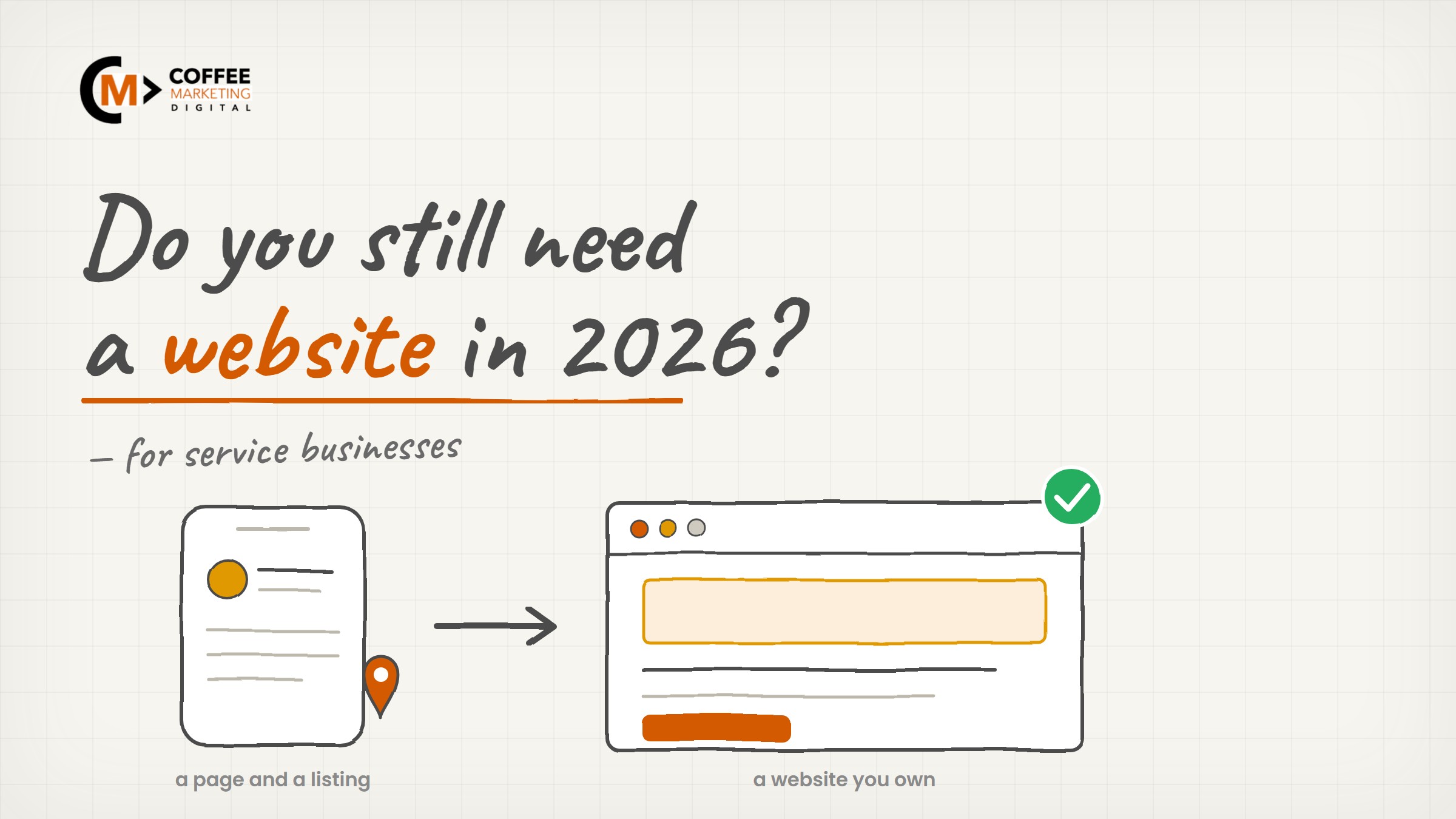
For a lot of small businesses the website has always felt optional. You have a Facebook page, a Google listing and word of mouth, and the work keeps coming. The trouble is that more of your customers now check you out online before they call, and increasingly they ask an AI which provider they should use, rather than scrolling the results themselves. This article explores the different perspectives and the questions we get asked on whether a service business needs a website, and what you might be losing without one.
First, the case for not bothering to have one
Some service businesses genuinely tick over without a website. A sole trader booked solid on word of mouth, a trade that lives on repeat custom and recommendations, a business whose Google Business Profile and an active Facebook page cover the basics. If that is you and the diary is full, a website is clearly not an emergency, and when you are busy the time to create one can be an unnecessary time sink.
But "the work keeps coming" is a snapshot, not a strategy. It tends to hold right up until a quiet month, a big customer who wants to check you out properly, or a competitor who looks more credible online than you do. The costs of having no site are real, they are just easy to miss because you never see the enquiry you did not get.
For most people the main consideration is cost. However cheaply you can set up your own website, it will still carry some kind of cost. Even using low-cost drag-and-drop builders like Squarespace or Wix, for it to look professional enough to give you the reputational benefits of a website, you will have to reach for your pocket.
When you might genuinely not need one, yet
To be fair about it, there are cases where a site can wait. A sole trader retiring in a year, a business at full capacity turning work away, someone who genuinely gets every job through a referral network they trust. Even then, a simple site protects you: it is the difference between controlling how you look online and leaving it to a stale listing and other people's reviews. The honest position is not "everyone needs a big website", it is "almost everyone benefits from owning a small, credible one".
What you actually lose without one
Credibility. When someone is given your name, the first thing they do is look you up. A real website, even a small one, tells them in seconds that you are established, what you do, and why to trust you. A one-line listing or a Facebook page that last posted in March quietly says the opposite, and you rarely hear about the job it cost you.
Control of your own presence. A Facebook page and a marketplace listing are rented land. The platform owns the audience, sets the rules, changes how many people see you, and can suspend the account with no warning and no appeal. Your website is the one place online that is actually yours, on your own domain, that no algorithm change can take away.
Effortless enquiries. A proper site makes getting in touch a single tap: a clear phone number, a short enquiry form, your service area, your hours. Every extra step between "interested" and "in touch" loses you people, and a scattered presence across a listing and a social page is full of extra steps.
Being found at all. This is the one that has changed the most, and it deserves its own section.
Being found online has quietly changed
It used to be enough to show up in Google's local results. Now a growing share of people ask an AI, ChatGPT, Google's AI Mode or Gemini, "who is a good [trade] near me", and read a short answer that names a business or two. Those answers are built by reading websites.
A Facebook page is largely closed to those tools, and a one-line listing is thin, so there is very little for the AI to read and repeat. The business with a proper, readable site is the one it can actually recommend. We covered this shift in our guide to the 2026 search changes, and the short version is simple: being findable now means being readable, by Google and by AI. No site, or a site an AI cannot make sense of, and you are quietly left out of the answer.
“Even a low-cost website can seriously help you stand out amongst the crowd, help people find you, and ensure your sales pipeline is full and the leads keep coming in. If you have too much work, you can always increase your prices as demand increases.”
— Carrie Sargent, Coffee Marketing
What a small service-business site actually has to do
It does not need to be big. A good website earns trust in the first few seconds, says clearly what you do and where you do it, makes getting in touch effortless, loads fast on a phone, and can be read by Google and AI. Five things, done properly, across a handful of pages. That is the whole job, and it is well within reach for any service business.
What we do, and why it works
We design, build and look after websites for small businesses. You get a site that does the selling for you, without a scrap of the technical hassle landing on your desk. It starts with a friendly kickoff call to understand your business, then we design a look built around your brand, build every page, write or polish the copy, sort the images, add the legal pages, and take it live on your own domain. After that, we keep it running for you.
What you get is a site that works as hard as you do:
- Bespoke to your brand, not a template. Your colours, your tone, a look that stands out instead of blending in with every competitor on the same theme.
- Fast and mobile-first. Google rewards it, customers stay on it, and it looks right on every phone.
- Built to be found by Google and AI. The search foundations and structured data most cheap builds skip, so you show up when people, and increasingly their AI assistants, go looking for what you do.
- Legally compliant from day one. The privacy, cookie and data-protection pages you are required to have in the UK, done properly.
- Fully managed. Hosting, security, updates and the changes you need, all handled for you on one simple monthly plan.
- Yours to keep. You own the site and can take it anywhere.
Our Website Design & Build service starts from £350 to build, then from £49 a month to host and care for it. No DIY builder to wrestle, no three-thousand-pound project, and no being left to maintain it yourself.
Right now this is built for service and local businesses, and we are building an ecommerce version too, so if you sell online it is well worth an early conversation.
If you are weighing it up, the honest first step is a short chat about what your site actually needs to do. That is a free call, not a commitment.
Frequently asked questions
Isn't my Google Business Profile enough?
It helps people find you on the map, but it is very limited in how, and how many, people can find you. You do not control it, and it gives you no unique identity to help you stand out from your competitors. A website is where you earn trust, explain what you do properly, capture enquiries on your terms, and give Google and AI something real to read about you.
I get all my work by word of mouth. Do I still need one?
Word of mouth still sends people online to check you out before they call. A small, credible site turns that reference into a booking instead of a moment of doubt, and it keeps working when a quiet month arrives.
How many pages does a service business actually need?
Usually a handful: a home page, an about page, your services, and a contact page with an enquiry form. Enough to earn trust and get found, without paying for pages you will never use.