
The New Era of Performance Max: A Strategic Analysis of Enhanced Reporting and Control
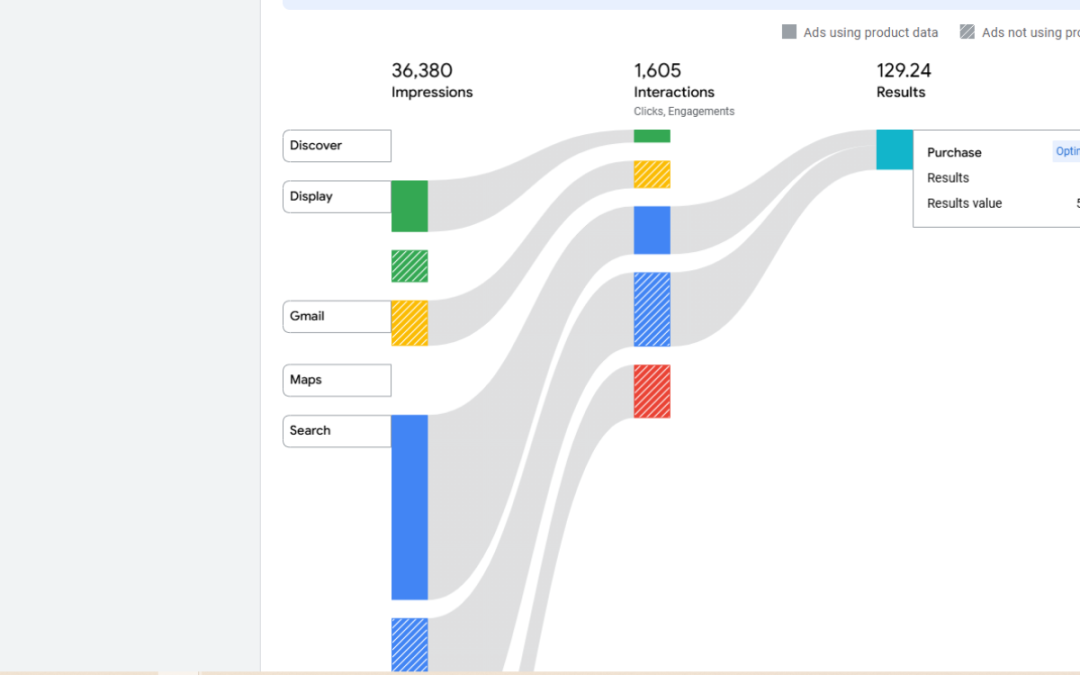
The recent series of updates to Google's Performance Max (PMax) campaign type represents a fundamental paradigm shift in the platform's evolution. Historically, advertisers have approached PMax with a mixture of optimism for its automated power and apprehension due to its operational opacity, often referring to it as an opaque "black box". The latest enhancements are a direct and significant response to this long-standing feedback, signaling a strategic move by Google to build advertiser trust and encourage adoption by more sophisticated, data-driven marketing teams.
Coffee Marketing have long called out the issues with Performance Max campaigns lacking data and reporting, which vastly reduces control over campaigns and insight to be able to improve campaign performance. Seems that Google are trying to resolve the cry from advertisers with these latest changes.
Warning: this is a long article, but we believe it warranted a thorough assessment of the changes and how this impacts our clients (and our) strategies moving forward.
These updates are not merely incremental feature additions; they are built upon three core pillars that redefine the advertiser's relationship with the platform's AI. We will explore them below in depth:
- Enhanced Transparency & Control: The updates grant advertisers unprecedented visibility into channel-level performance, creative effectiveness, and traffic sources, moving PMax from a system of blind trust to one of informed collaboration.
- Data-Driven Creative Intelligence: The introduction of quantitative performance metrics at the individual asset level transforms creative optimisation from a subjective art into a data-backed science, enabling a direct link between creative effort and business outcomes.
- Sophisticated Customer-Centric Targeting: The platform's capabilities have evolved beyond simple conversion acquisition to a more nuanced focus on acquiring high-value new customers, allowing for optimisation toward long-term business health and customer lifetime value.
This report provides a comprehensive analysis of this new PMax toolkit. It will deconstruct the mechanics of each new feature, outline actionable strategies for leveraging these tools to optimise campaigns, and evaluate their direct impact on key performance indicators. The analysis concludes that these updates, when leveraged strategically, will lead to significant improvements in metrics like Cost-Per-Acquisition (CPA) and Return on Investment (ROI) and will fundamentally alter how PMax insights are integrated into broader, cross-channel marketing strategies.
Deconstructing the New PMax Toolkit: Features and Functions
The latest wave of updates introduces a suite of new tools and controls that can be categorised into three primary areas: campaign-level steering, creative reporting, and customer acquisition intelligence. Each component provides advertisers with more granular levers to guide the AI and clearer feedback on its performance.
Enhanced Campaign Controls: Reclaiming the Steering Wheel
A primary focus of the updates has been to provide advertisers with more direct control over campaign targeting and traffic quality, addressing key limitations of the original PMax framework.
Campaign-Level Negative Keyword Lists
Mechanics: Advertisers can now create and apply centralised negative keyword lists across multiple PMax campaigns simultaneously. This functionality, long a standard in Search campaigns and frequently requested by the advertising community, replaces the previous, inefficient method of adding negative keywords to each campaign individually or relying on Google support representatives for implementation.
Significance: This is a critical tool for maintaining brand safety and improving budget efficiency. For instance, a luxury retailer can now use a single list to exclude terms like "cheap" or "bargain" from all PMax campaigns, ensuring brand suitability without manual, campaign-by-campaign updates. This scalable control improves traffic quality by preventing ad spend on irrelevant or brand-damaging search queries.
Expanded Search Themes
Mechanics: The limit for search themes that can be added to an asset group has been doubled, increasing from 25 to 50. Search themes are advertiser-provided signals—essentially keywords and concepts—that influence, but do not strictly dictate, the queries for which PMax ads will be shown.
Significance: This expansion allows advertisers to provide the AI with a richer set of inputs about their business and target customers. By giving the algorithm more relevant information, it can learn faster, reduce wasted ad spend during the initial learning phase, and expand its reach into more relevant, long-tail query spaces while maintaining a high degree of relevance.
Granular Demographic and Device Targeting
Mechanics: Full control over device targeting (mobile, desktop, tablet) and demographic age exclusions are now fully available to all advertisers, with gender-based exclusions currently in beta testing. These updates bring PMax's targeting controls more in line with the capabilities long available in traditional Search, Display, and YouTube campaigns.
Significance: This enables precise audience refinement and reduces wasted ad spend. A B2B software company, for example, can now choose to exclude mobile and tablet devices if its internal data shows that conversions occur almost exclusively on desktop computers. Similarly, a brand with age-restricted products can now ensure regulatory compliance by excluding specific age ranges, thereby improving targeting precision and budget allocation.
Advanced Creative Reporting & Insights: Opening the Black Box
Perhaps the most transformative set of updates lies in the new reporting capabilities, which provide unprecedented transparency into creative performance and the AI's ad-serving decisions.
Asset-Level Conversion Reporting
Mechanics: This update introduces direct conversion metrics—including conversions, conversion value, cost, clicks, and cost-per-conversion—into the asset-level report for individual images, videos, headlines, and descriptions. This is a monumental shift away from the previous system, which primarily relied on vague, qualitative "Ad Strength" scores (e.g., "Low," "Good," "Best") as the main indicator of creative performance.
Significance: For the first time in PMax, advertisers have quantitative, bottom-line feedback on which specific creative elements are driving business outcomes. This enables true data-driven creative optimisation, allowing teams to systematically identify and scale their most effective assets while removing underperformers.
The Combinations Report
Mechanics: This report provides a view into the top-performing combinations of assets as they are dynamically assembled and served to users by the AI. It showcases the top six combinations for each primary asset category (text, image, and video), allowing advertisers to see which pairings are most effective.
Significance: This offers a window into the AI's creative assembly process. By understanding which headlines are most frequently and effectively paired with which images or videos, marketers can gain valuable insights into what resonates with their audience. This knowledge can then be used to guide the development of more cohesive and synergistic creative sets, improving the overall quality of inputs for the campaign.
Final URL Expansion (FUE) Reporting
Mechanics: Advertisers can now view performance data for assets that are dynamically generated by Google's AI based on the content of a campaign's landing pages. Critically, the update also grants advertisers the ability to remove any of these auto-generated assets from the campaign.
Significance: This directly addresses a major pain point for brand-conscious advertisers. Previously, FUE could produce off-brand or low-quality creative assets with no recourse for the advertiser. The new visibility and control restore brand integrity, allowing advertisers to benefit from the scale of automation without sacrificing their creative standards.
AI-Powered Creative Recommendations
Mechanics: The PMax interface now provides actionable, image-specific recommendations designed to improve performance. These suggestions might include the types of images to add or how to edit existing ones for better cross-channel performance. The platform links these recommendations directly to its native AI-powered image editor, allowing for one-click implementation.
Significance: This creates a seamless and efficient feedback loop, moving from insight to action within seconds. It empowers advertisers to quickly iterate on and improve their creative mix without needing to rely on external design resources or complex workflows, accelerating the optimisation cycle.
Refined Customer Acquisition Reporting: Focusing on Growth
The final pillar of the updates focuses on providing clearer data and more sophisticated tools for new customer acquisition, a primary goal for most of our clients and advertisers in general. How this works under the hood in light of Cookie Consent V2 remains unclear, but this is certainly a step in the right direction for the team! Advertising professionals know that value extends beyond a single sale. With the new lifecycle goals configuration there is now scope to target new customers as well as retention with greater control.
Elimination of Unknown Conversions
Mechanics: Google has refined its backend logic for differentiating between new and returning customers. This improvement has effectively eliminated the ambiguous "Unknown" category that previously appeared in lifecycle reporting.
Significance: This provides a much clearer and more accurate picture of new customer acquisition performance. For businesses focused on growth, this clean data is vital for understanding the true impact of their campaigns and makes automated bidding strategies that rely on new customer signals significantly more effective and reliable.
Goal Diagnostics Tool
Mechanics: A new diagnostic tool has been integrated into the platform that proactively scans for and flags technical issues related to conversion tracking. It can identify problems such as broken or missing conversion tags, misconfigured goals, or other tracking errors that could be hindering performance, and it provides actionable recommendations for resolution. We still see many poorly implemented tracking solutions, especially with Tag Manager, which we need to step in and help fix.
Significance: This is a crucial quality-of-life improvement that helps prevent campaigns from underperforming due to preventable technical setup errors. By ensuring that the data feeding the AI is clean and accurate, this tool saves advertisers significant time in troubleshooting and helps maintain campaign integrity. We think this is particularly important when implementing cart level data and profit based bidding.
High-Value New Customer Acquisition Mode
Mechanics: This advanced setting, currently exclusive to PMax, allows advertisers to optimise not just for new customers, but for high-value new customers. Advertisers can upload their existing customer lists via Customer Match and assign an additional monetary value to a conversion from a new customer. Google's AI will then use this information to bid more aggressively for users who are not on the existing customer list but exhibit characteristics similar to a brand's most valuable customer cohorts.
Significance: This marks a strategic evolution in acquisition targeting. It shifts the optimisation goal from acquiring any new customer to acquiring the right new customer. This allows businesses to align their advertising efforts with long-term goals like increasing Customer Lifetime Value (CLV) rather than focusing solely on the immediate value of the initial transaction.
Strategic Application: From Insight to Optimisation
Understanding the new features is the first step; strategically applying them to drive superior results is what separates successful advertisers. The following playbooks translate the new toolkit into actionable processes for creative optimisation and customer acquisition.
The Creative Optimisation Playbook
The new asset-level conversion data transforms creative management from a guessing game into a data-driven discipline.
Identifying Winners and Losers
The most direct application of the new reporting is to conduct a systematic audit of all creative assets.
Process: Within the asset-level report, advertisers should add columns for key conversion metrics: Conversions, Conversion Value, and Cost per Acquisition (CPA). By sorting the assets by these metrics, it becomes straightforward to identify the top 5-10% of assets (the "winners") that are most efficiently driving business goals, as well as the bottom 10-20% of assets (the "losers") that are consuming budget with little to no return.
Action: The "losing" assets should be paused or replaced immediately. The primary objective is to improve the overall quality of the asset pool available to the AI. By systematically removing the worst-performing elements, the algorithm is forced to serve combinations of higher-quality assets, which naturally elevates the campaign's overall performance.
Guiding Future Creative Development
The true strategic value of this data lies in its ability to inform future creative production.
Process: A thorough analysis should be conducted to identify the common characteristics of the "winning" assets. This involves asking critical questions: Do lifestyle images featuring people outperform sterile product-on-white-background shots? Do headlines framed as questions generate a lower CPA than those making bold statements? Do short, fast-paced videos drive more conversions than longer, narrative-driven ones? The "Combinations" report can provide further context by showing which of these winning assets are frequently paired together by the AI.
Action: These quantitative findings should be synthesised into a data-backed creative brief for design and copywriting teams. For example, a brief could state: "Our analysis of PMax asset data shows that lifestyle images featuring our product in an outdoor setting, combined with headlines that include the word 'Discover,' have a 30% lower CPA than our account average. The next creative sprint should focus on producing 10 new variations of this winning formula." This approach replaces subjective creative feedback with empirical evidence, aligning the creative development process directly with performance goals.
Measuring the Bottom-Line Impact
The value of these updates can be quantified by analysing their direct and indirect effects on core business metrics and by comparing the new, more transparent PMax environment to its predecessor.
Evaluating KPI Improvements
The new tools and controls are designed to directly and positively influence key performance indicators.
- Conversion Rate: The ability to systematically identify and remove low-performing creative assets while scaling high-performing ones inevitably raises the overall quality and relevance of the ads being served. This leads to higher user engagement and, ultimately, a better campaign-wide conversion rate.
- Cost-Per-Acquisition (CPA): Efficiency is improved on two fronts. First, enhanced targeting controls like campaign-level negative keywords and precise demographic exclusions reduce wasted spend on irrelevant clicks and low-value audiences. Second, optimising the creative mix for conversions makes each dollar spent more effective. The combination of reduced waste and increased effectiveness directly lowers the effective CPA.
- Return on Investment (ROI): The most significant impact is on ROI. The ability to optimise specifically for high-value new customers aligns ad spend with long-term business value, not just short-term revenue. Furthermore, the new Channel Performance Report provides visibility into which channels are generating the highest ROI, allowing for a more informed understanding of performance and enabling smarter strategic decisions about the overall marketing mix.
Broader Strategic Implications for Integrated Marketing
The impact of these PMax updates extends far beyond the optimisation of individual campaigns. The new data streams and capabilities should be leveraged to inform and enhance an organisation's entire marketing strategy.
PMax as a Market Research Engine
With its newfound transparency, PMax has become one of the most powerful and efficient market research tools available to digital advertisers.
Creative Insights Cross-Pollination
The asset-level performance data generated within PMax is the result of a massive, multi-channel A/B test conducted by Google's AI. A headline, image, or video that is identified as a top performer in PMax has been validated against diverse audiences across Search, Display, Discover, Gmail, and YouTube contexts. This makes the data incredibly robust and versatile.
This insight should be systematically applied across the marketing organisation. The top-performing headlines and descriptions from PMax asset reports should be immediately implemented and tested in standard Search campaigns' Responsive Search Ads (RSAs). The most effective image assets should form the creative foundation for new Display and Demand Gen campaigns. The video concepts that drive the lowest CPA in PMax should inform the strategic direction for dedicated, standalone YouTube campaigns. This practice breaks down creative silos and leverages PMax's AI as a universal creative discovery engine, improving performance across all channels.
Channel and Audience Discovery
The Channel Performance Report may reveal surprising and valuable information about customer behavior. A brand that has historically focused all its efforts on Search and Shopping might discover through PMax that its products convert exceptionally well on YouTube or the Discover feed.
This data provides a low-risk method for channel exploration. If PMax demonstrates a high volume of conversions from YouTube at an acceptable CPA, it builds a data-backed business case for launching a dedicated, standalone YouTube campaign designed to scale that initial success. In this model, PMax serves as the strategic "test," and the dedicated campaign becomes the "scale." This approach allows for more intelligent and de-risked budget allocation across the entire marketing portfolio, guiding expansion into new, profitable channels.
The Future of Human-AI Collaboration in Advertising
These updates signal a maturation in Google's philosophy regarding AI in advertising. The initial iteration of PMax was largely "AI-dominant," requiring advertisers to provide assets and a goal before ceding most of the control to the algorithm. The new PMax operates on a model of "AI-collaboration."
The AI still handles the immensely complex tasks of real-time bidding and cross-channel ad serving. However, it now actively requests and incorporates strategic human input (via expanded search themes, negative keywords, and high-value customer data) and, in return, provides clear, quantitative data for human analysis and strategic guidance.
This redefines the role of the modern PPC manager. Their value is no longer derived from manual, granular tasks like bid adjustments. Instead, they function as a strategic "AI Shepherd." Their primary responsibilities are to provide the AI with the highest possible quality of inputs—clean data, compelling creative, and clear strategic goals—and to expertly interpret the AI's outputs (performance reports) to guide the next cycle of strategic inputs. In this new collaborative environment, campaign success will be determined by the quality and speed of this human-AI feedback loop.
Questions about Performance Max?
Our team of PPC experts can help you leverage these new features for your campaigns.
Get in Touch